Custom luggage tags last longest when you clean them with the right method for their material, store them dry and out of the sun, and check the strap before every trip. Shop Custom Luggage Tags makes tags in silicone, anodized aluminum, full-color PVC, vegan leather, genuine leather and wood, and this guide explains how each one ages and what care it needs.
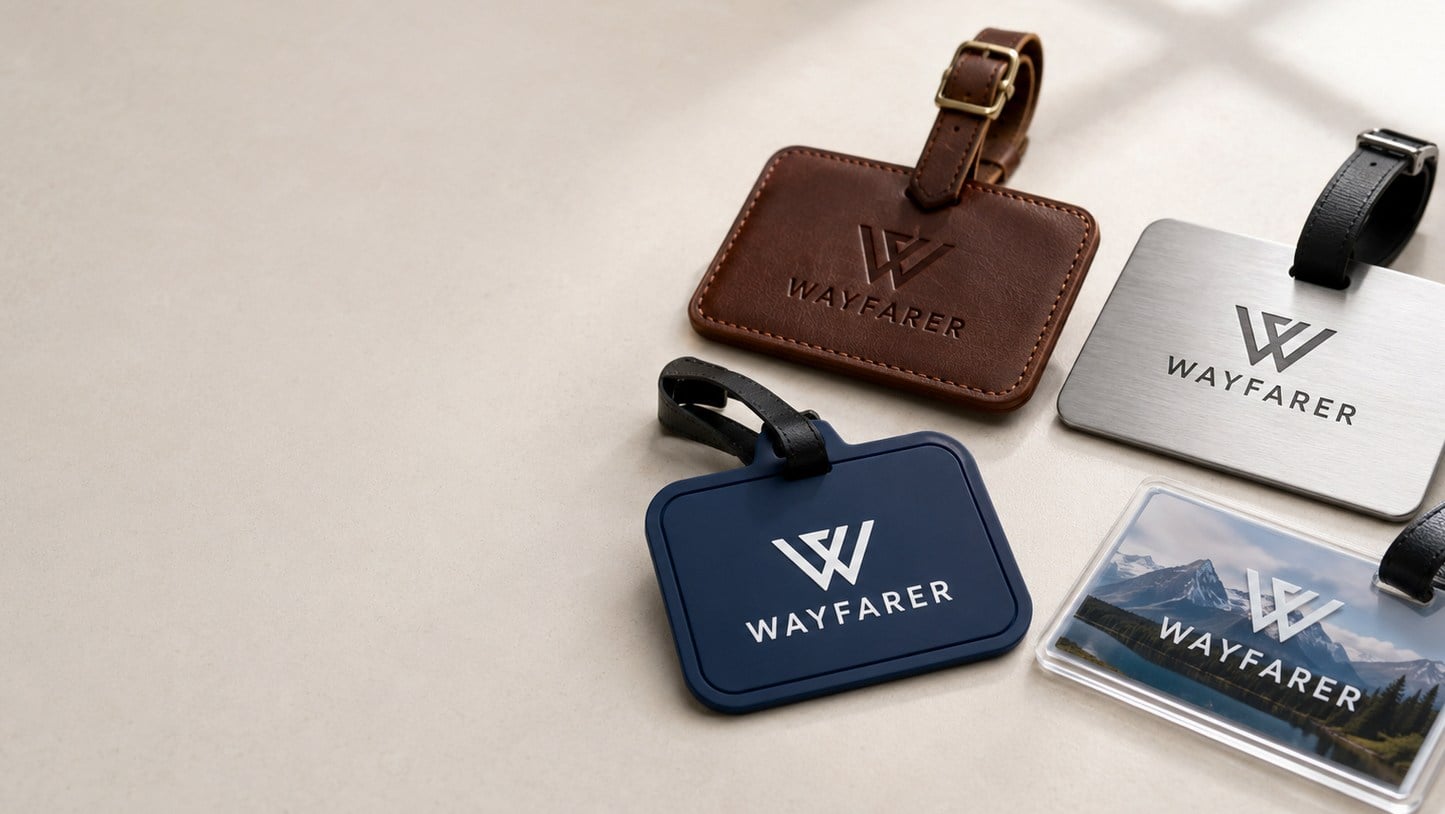
- Silicone, PVC and aluminum clean with mild soap and water
- Genuine leather benefits from occasional conditioning; vegan leather does not need it
- Wood tags should be kept dry and never soaked
- Straps usually wear out before the tag face, so inspect them each trip
- Minimum order 12, free mockup within 24 hours for replacements
How long do custom luggage tags last with regular travel?
Custom luggage tags last for many trips when the material matches how the bag travels and the tag gets a little basic care. Shop Custom Luggage Tags makes tags in silicone, wood, anodized aluminum, full-color PVC, vegan leather and genuine leather, and each one ages differently. Some stay looking new with almost no attention, while others develop character or need occasional conditioning to stay supple.
What wears a luggage tag down is rarely one dramatic event. Damage builds up from conveyor belts, the friction of bags rubbing in a cargo hold, rain on the tarmac, sun through a car window and repeated flexing at the strap hole. A tag that sits on a carry-on in the overhead bin lives an easier life than one hanging off a checked hockey bag or an equipment case.
Think about longevity in three parts: the face (where your logo or name sits), the body (the material itself) and the attachment (the strap, loop or buckle). A tag can look perfect and still be lost if the strap fails, so care and inspection should cover all three. The sections below walk through each material, then cover cleaning, storage and when to retire a tag.
Which luggage tag material holds up best to rough baggage handling?
For checked bags that take the hardest handling, silicone and anodized aluminum luggage tags are usually the toughest choices, with full-color PVC close behind. Leather and wood tags are durable too, but they reward a buyer who is willing to wipe, condition or dry them now and then. The table below compares how each material on the site tends to behave over time.
| Material | How it ages | Main care need | Best fit |
|---|---|---|---|
| Silicone | Flexible, shrugs off bending and drops | Rinse off dust and grime | Kids, teams, checked bags |
| Anodized aluminum | Rigid, engraving stays crisp | Wipe off scuffs, check the strap | Equipment cases, frequent flyers |
| Full-color PVC | Colors stay bright, surface resists water | Mild soap wipe | Detailed logos, events |
| Vegan leather | Holds shape, low upkeep | Damp cloth, avoid heat | Corporate gifts, budget-conscious premium |
| Genuine leather | Develops a patina, softens with use | Occasional conditioning | Executive gifts, hotels |
| Wood | Natural grain, warm look | Keep dry, wipe quickly | Eco-minded brands, weddings |
No material is wrong for every traveler. A genuine leather tag that softens and darkens over years is part of its appeal, while the same change on a bright PVC event tag would look like wear. Match the material to how much aging the recipient will welcome.

How do you clean silicone, PVC and aluminum luggage tags?
Silicone, full-color PVC and anodized aluminum luggage tags all clean the same simple way: a soft cloth, lukewarm water and a drop of mild dish soap, followed by a clean rinse and a towel dry. These three materials are the easiest to maintain on the Shop Custom Luggage Tags lineup, which is why they are popular for teams, schools and travel groups.
- Remove the tag from the bag so grit trapped under the strap does not scratch the face.
- Wipe the front and back with a soft cloth dampened in soapy water.
- Use a soft toothbrush on raised silicone details or engraved lines where dirt collects.
- Rinse with plain water and dry completely before reattaching.
Skip abrasive pads, scouring powder and strong solvents. Harsh cleaners can dull a PVC print surface, haze a silicone finish or scratch the dyed layer of anodized aluminum. Silicone can also pick up lint, so a quick rinse after a dusty trip keeps the logo sharp. On aluminum, check that the engraving is still clean and the strap hole has no sharp burrs that could cut the strap.
How should leather and wood luggage tags be cared for?
Leather and wood luggage tags need gentler, drier care than synthetic tags: wipe them with a barely damp cloth, let them air dry away from heat, and treat them occasionally with a product made for that material. Shop Custom Luggage Tags offers genuine leather, vegan leather and wood tags for buyers who want a warmer, premium feel, and a little care keeps that feel for years.
Genuine leather
Genuine leather tags look best when they are allowed to age. Wipe away surface dirt, and if the tag gets soaked, blot it and let it dry slowly at room temperature. A small amount of leather conditioner a few times a year keeps the edges from drying out. Debossed logos on leather are pressed into the material, so they stay visible as the patina deepens.
Vegan leather
Vegan leather does not need conditioning. A damp cloth handles most marks. Keep it away from car dashboards and radiators, since high heat can soften or warp synthetic leather.
Wood
Wood tags should stay as dry as possible. Wipe off rain right away and avoid soaking or dishwashing them. If the surface starts to look dry, a light wood-safe oil or wax restores the grain. Engraved wood logos are cut into the surface, so they do not peel or rub off.
Why do luggage tag straps fail before the tag itself?
Luggage tag straps and loops usually fail before the tag face because they carry all the pulling, twisting and snagging during baggage handling. A strap that is cracked, stretched or frayed is the most common reason a custom luggage tag goes missing, even when the tag itself still looks new.
Make strap inspection part of your routine. Before each trip, give the tag a firm tug, look at the area around the strap hole, and check any buckle or loop closure. Replace a strap at the first sign of cracking rather than waiting for it to snap on a belt. When you order through Shop Custom Luggage Tags, the strap style and color are chosen along with the tag, so ask about the attachment that best suits checked bags, carry-ons or hard equipment cases.
- Thread the strap through a fixed handle rather than a zipper pull that can tear off.
- Keep the strap snug so the tag cannot catch on other bags or machinery.
- Keep a few spare straps with your travel kit for long trips.
How should you store custom luggage tags between trips?
Store custom luggage tags flat, dry and out of direct sunlight between trips, and keep unused stock in its original packaging. This matters most for companies, teams and hotels that buy a batch from Shop Custom Luggage Tags and hand tags out over months, since tags sitting in a hot storage room or a sunny window can age before anyone uses them.
Leather and wood tags prefer a cool closet over a damp basement or a hot garage. Avoid stacking heavy boxes on leather tags, which can leave dents. For silicone and PVC, avoid storing tags pressed against printed paper or other colored items in heat, which can transfer marks. If you keep tags on a bag year-round, a quick wipe after each trip does more for longevity than any storage trick.
Organizations reordering later can match an earlier batch, so there is no need to overbuy and store stock for years. Order what you will hand out in the near term and plan a reorder when the supply runs low.
When should you replace a custom luggage tag?
Replace a custom luggage tag when the contact details are out of date, the face is no longer readable from a short distance, or the strap or strap hole shows cracks. A luggage tag only does its job if a baggage handler or airline agent can read it quickly and if it stays on the bag.
Outdated information is the most overlooked reason to replace tags. A new phone number, an office move or a rebrand means the old tags point to the wrong place. For businesses, a worn or faded tag also sends a quieter message about the brand on every trip. If you are refreshing a branded program, request a new mockup from Shop Custom Luggage Tags; it arrives within 24 hours, revisions are free, and standard turnaround is about 2 weeks after approval. The minimum order is 12, so even a small team refresh is practical.
Choosing a tougher material on the next order is often the simplest fix. If your last tags wore out on checked equipment bags, compare silicone or anodized aluminum. If recipients loved the look but not the upkeep, vegan leather keeps the premium feel with less care.
Frequently asked questions
Can silicone luggage tags go in the dishwasher?
Silicone luggage tags clean easily by hand, and hand washing is the safer choice. A soft cloth, lukewarm water and mild soap remove grime without stressing the logo or the strap hole. Dishwasher heat and harsh detergent can wear the finish over time and may damage a strap left attached. Rinse, towel dry and let the tag air dry fully before putting it back on your bag.
Will a genuine leather luggage tag darken over time?
A genuine leather luggage tag usually darkens and softens as it is handled, exposed to light and carried on trips. Many travelers value this patina because it makes each tag look personal. Shop Custom Luggage Tags debosses logos into leather, so the mark stays visible as the color deepens. Occasional conditioning keeps the edges supple without stopping the natural aging that gives leather its character.
What happens if a wooden luggage tag gets soaked in rain?
A wooden luggage tag that gets soaked should be wiped right away and left to air dry at room temperature, away from heaters or direct sun. Fast drying with heat can cause warping or cracking. Once fully dry, a light coat of a wood-safe oil or wax helps restore the surface. Engraved logos are cut into the wood, so rain does not wash them off.
Do anodized aluminum luggage tags scratch easily?
Anodized aluminum luggage tags are rigid and hard-wearing, and the engraved logo sits below the surface, so light scuffs rarely affect readability. Deep scrapes against other hard cases can still mark the colored layer. Wipe the tag with a soft damp cloth, avoid abrasive pads, and check the strap hole for sharp edges. Shop Custom Luggage Tags recommends aluminum for equipment cases and frequent flyers.
Can full-color PVC luggage tags fade in sunlight?
Full-color PVC luggage tags keep their colors well in normal travel, but long exposure to strong sun, such as months on a car dashboard or sunny window, can wear any printed surface. Store spare tags out of direct light and clean with mild soap rather than solvents. For bright logos that travel often, PVC remains a strong choice on Shop Custom Luggage Tags.
How often should I check the strap on my luggage tag?
Luggage tag straps are worth a quick check before every trip, especially for checked bags. Tug the tag firmly, look for cracks or fraying near the strap hole, and confirm any buckle closes securely. Straps carry the pulling and twisting of baggage handling, so they usually wear out before the tag face. Replacing a tired strap early is the easiest way to avoid a lost tag.
Is vegan leather or genuine leather easier to maintain on a luggage tag?
Vegan leather luggage tags are easier to maintain because they never need conditioning; a damp cloth handles most marks. Genuine leather needs occasional conditioning but rewards that care with a richer patina over time. Both take a debossed logo well. Shop Custom Luggage Tags offers both, so choose vegan leather for low upkeep and genuine leather for recipients who enjoy material that ages visibly.
What is the best way to store extra branded luggage tags for future events?
Extra branded luggage tags store best flat, dry and out of direct sunlight, ideally in their original packaging in a cool closet. Avoid hot garages, damp basements and heavy stacked boxes that can dent leather. Because Shop Custom Luggage Tags can match an earlier batch on a reorder, you can buy for near-term needs instead of storing large quantities for years.
Can I replace just the strap instead of reordering luggage tags?
Luggage tag straps can often be replaced on their own, which extends the life of tags that still look good. Keep a few spare straps with your travel supplies, and swap any strap that is cracked or stretched. If you want matching replacements for a whole branded program, ask Shop Custom Luggage Tags about strap options when requesting a quote or reorder.
Which luggage tag material needs the least care for a kids' camp?
Silicone luggage tags need the least care for a kids' camp because they bend without breaking, survive drops and clean with a simple rinse. Bright silicone colors also help children spot their own bags quickly. Full-color PVC is a good second option when the camp logo has fine detail. Shop Custom Luggage Tags starts at a minimum of 12, which suits small cabins and groups.
Should hotel guest luggage tags use a low-maintenance material?
Hotel guest luggage tags benefit from a material guests will keep using without fuss, so vegan leather, PVC and aluminum are practical choices. Genuine leather works well for premium suites where an aging patina fits the brand. Shop Custom Luggage Tags sends a free mockup within 24 hours, so a hotel can compare how its logo looks on two materials before committing.
Get a free mockup for your luggage tags
Send your logo or idea and the quantity you have in mind. Shop Custom Luggage Tags returns a free mockup within 24 hours, you approve the design before anything is produced, and standard turnaround is about two weeks with faster options available. Get a custom quote.